For homeowners, property owners, and businesses, appliance pickup FAQs explain what items a service may take and how to get them ready. In West Chester, accepted appliances and pickup plans can vary by service and site. Make an item list, clear a safe path, and ask who must disconnect each appliance before booking.
An old appliance can cause trouble during a move, home update, or tenant change. West Chester PA Junk Removal can help customers understand what to prepare and what to ask before arranging pickup. The right plan depends on the appliance, where it is, and how the crew can reach it.
Table of Contents
- What appliances can be picked up?
- How should I prepare an appliance for pickup?
- Do appliances need to be disconnected before pickup?
- Can appliances be picked up from inside a home or business?
- What happens to appliances after pickup?
- Are there rules for disposing of refrigerators and other appliances?
- How do I choose an appliance pickup option?
What appliances can be picked up?
Pickup services often take large household appliances, but each service sets its own rules. Common items include refrigerators, freezers, washers, dryers, stoves, and dishwashers. Some services may accept other large appliances as well, so tell the service what you have before planning a visit.
Which large household appliances are commonly accepted?
A pickup crew may take an appliance from a home, rental unit, office, or other site. Some services accept items that work and items that are broken. Others may have limits based on the appliance, its parts, or where it is located.
Make a short list before asking about pickup. Include the kind of appliance, its condition, and where it sits. A freezer in a basement may need a different plan from a stove near an outside door. Clear details help the service decide what crew and tools may be needed.
Can businesses and property managers arrange pickup for multiple appliances?
Many services can discuss taking several appliances in one visit. This may help a landlord clear a unit or a business replace old equipment. When asking about the job, share the number and type of items, along with any limits on access.
For a larger cleanout, list the items by room or unit. A property manager might note a refrigerator in each empty apartment and a washer in a shared laundry room. West Chester PA Junk Removal can discuss which items may fit the pickup plan. Confirm that the service accepts each appliance before moving anything.
A list can also help a business plan an office cleanout or a retail space update. Note where each item is and whether staff can reach it. If several teams share the building, tell them which items are approved for removal. Clear plans can help avoid confusion on pickup day.
How should I prepare an appliance for pickup?
Start by emptying the appliance and clearing a safe route. Remove food, dishes, clothing, and loose parts. Before moving or taking anything apart, ask the pickup service what it expects you to do.
What should I do before removing a refrigerator?
Take out food and removable shelves or bins if the service asks you to. Wipe up spills and keep the doors from swinging while the refrigerator is moved. Do not leave food or loose items inside for the crew to sort through.
Keep children and pets away from the work area. Clear the route from the refrigerator to the exit. Move rugs, boxes, and small objects if it is safe. If a doorway or turn looks tight, measure it and tell the service before pickup.
A refrigerator door can shut in a way that traps a child or pet. Keep the appliance secure and out of reach while it waits for removal. Follow the maker’s instructions for safe storage and handling. Do not let children play near an appliance set aside for pickup.
Do washers, dryers, stoves, and dishwashers need special preparation?
Empty washers and dryers, and take loose items out of their drums. Remove cookware and food from a stove or oven. Take dishes out of a dishwasher and check for water inside. These steps help prepare the items, but they do not make an unsafe connection safe.
Leave hoses, cords, and attached parts in place unless the service gives other instructions. Do not cut wires or force an appliance out of a cabinet. If a unit is built in or sits in a tight space, take a photo to help explain the setup when arranging pickup.
A clean, open path can make it easier for the crew to reach an appliance. Move small objects only when you can do so safely. Do not try to lift or shift a large appliance alone. Tell the service if the item is stuck, built in, or hard to reach.
Do appliances need to be disconnected before pickup?
An appliance often needs to be disconnected before it can be moved, but the crew’s role can vary. Water, gas, and electrical connections may need help from a qualified person. Confirm who is responsible before the visit, and do not handle a connection if it feels unsafe.
Who should disconnect water, gas, or electrical connections?
Do not assume a removal crew can disconnect every appliance. Gas lines, fixed wiring, and plumbing may need a qualified professional. Check the appliance instructions and local rules, and ask the pickup service what must be ready before the crew arrives.
Unplugging an appliance may be simple when it has a normal plug and the area is dry. Do not touch a plug, wire, or outlet if it is wet, damaged, hot, or hard to reach. Ask a qualified person for help instead of taking a risk.
A washer or dishwasher can have water lines that may leak if handled the wrong way. A gas stove needs extra care around its gas line. If you are not sure how an appliance is connected, stop and ask a qualified professional before moving it.
What should I check before moving an appliance?
Check that the appliance is empty and that any needed disconnection is complete. Look for sharp edges, loose parts, water, and a clear route. Keep people away from the area while the appliance is being handled.
Large appliances can be heavy and hard to control. You do not need a professional for simple tasks such as removing food, wiping a surface, or clearing a walkway. But moving a heavy item, handling a gas line, or dealing with a damaged connection calls for trained help and proper tools.
If an appliance is easy to reach and only needs simple cleaning or emptying, you can usually do that preparation yourself. Do not take apart a unit or try to repair it just for pickup. Ask the service what work it will handle and what needs to be done first.
Can appliances be picked up from inside a home or business?
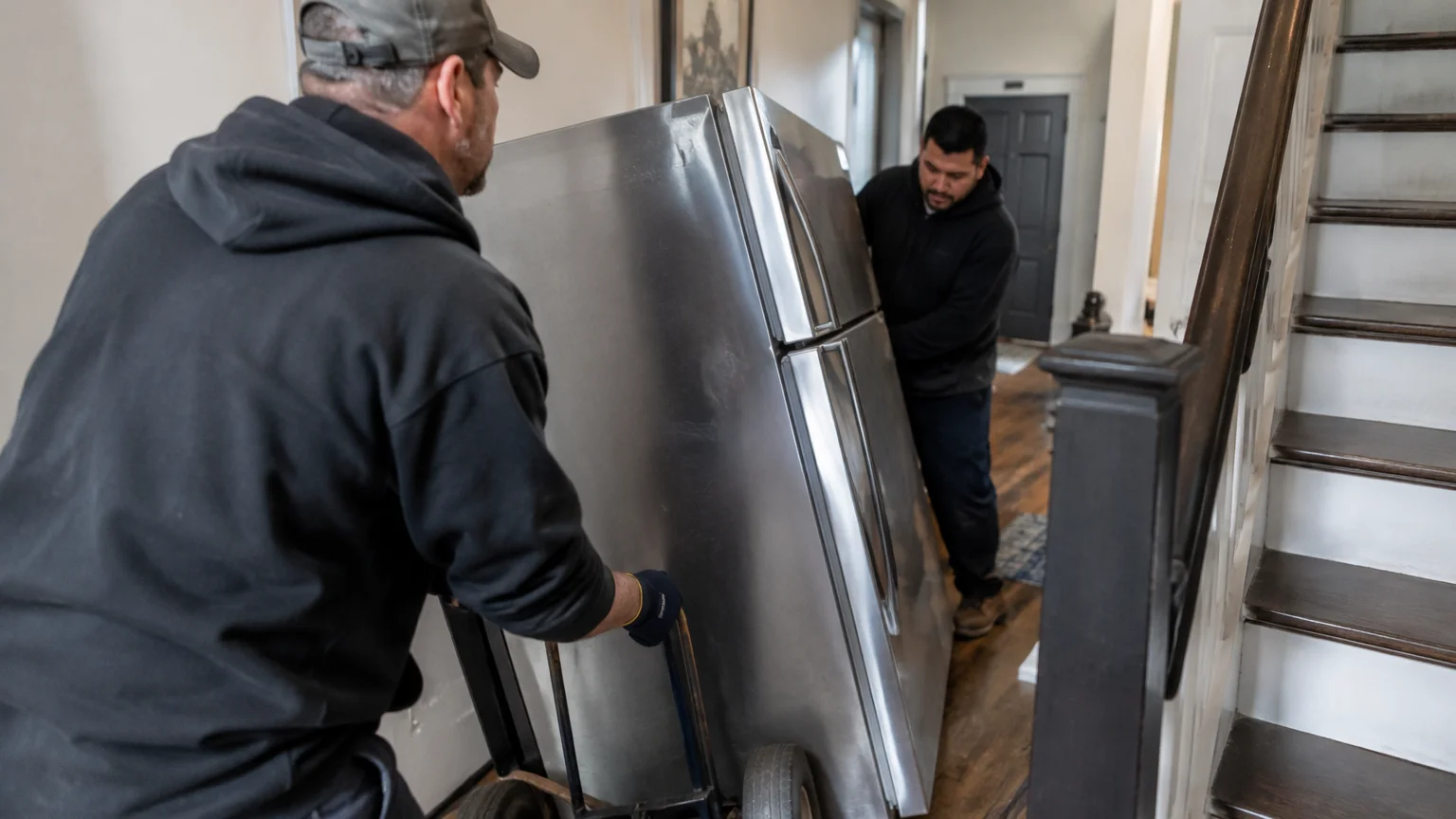
Many pickup services can take appliances from inside a building if the route is safe and the service agrees to that plan. Stairs, narrow halls, elevators, locked doors, and long walks can affect access. Share these details before arranging the pickup.
What access details affect pickup planning?
Tell the service where the appliance is and how the crew can reach it. Mention stairs, tight turns, low ceilings, parking limits, gates, loading docks, and elevator rules. For an office or store, explain any check-in steps or limits on work hours.
Clear the route before the crew arrives, if you can do so safely. Move small furniture, boxes, and rugs out of the way. Do not move a heavy appliance on your own to make the pickup easier. Tell the service if the unit is built in, stuck, or above or below the main floor.
Photos can help show a tight space or an unusual setup. They may also help the service ask useful questions before the visit. A clear plan can help prevent delays and lower the risk of damage to walls, floors, or the appliance.
How can property owners prepare for appliance removal between tenants?
Property owners can list each appliance that needs removal and note its condition. Check every room, storage space, and shared area. Arrange entry for the crew and explain any tenant schedules or building rules.
For several empty units, group the list by unit or room. Mark appliances that are still connected, built in, or hard to reach. A clear list helps the property team and pickup service agree on the work before the visit. Keep entryways and shared halls clear for other residents.
Businesses can use the same kind of plan when replacing break-room or laundry equipment. Set aside only the items approved for removal. Tell staff which areas need to stay open and where the crew can enter. These steps can help the pickup fit the site’s needs.
This kind of planning can also help with house cleanout FAQs or retail removal FAQs. The key is to list the items, note their location, and explain any access limits. Do not assume that every item in a room is part of the pickup. Mark the appliances that the service has agreed to take.
What happens to appliances after pickup?
After pickup, an appliance may be checked for reuse, recycling, or disposal. The next step depends on its condition, parts, materials, and local options. Ask the service how it handles each kind of appliance.
Which parts and materials may be recycled?
Appliances can contain metal, plastic, glass, wiring, and other materials. A recycling site may separate some parts so they can be used again. The exact process depends on the appliance and the site that receives it.
Refrigerators and freezers need special care because they may contain refrigerants. A refrigerant is a substance used to move heat in cooling equipment. It needs careful handling by people and sites set up for that work. Do not cut cooling lines or take apart a refrigerator yourself.
A pickup service may sort items or take them to a reuse, recycling, or disposal site. The steps can differ from one service to another. Ask where the appliance will go and whether parts may be reused or recycled. This helps you understand the process without guessing that every item follows the same path.
When might an appliance be donated or disposed of?
An appliance that works may be right for reuse if it meets a receiving group’s needs. A broken, unsafe, or incomplete appliance may instead go to a recycling or disposal site. Acceptance rules differ, so do not assume a group will take an item.
The service can explain which options may fit your appliance. It may ask about the item’s age, condition, missing parts, or signs of damage. Check with a donation group before leaving an appliance there. It may not accept the item, and an appliance left outside can create a safety issue.
Are there rules for disposing of refrigerators and other appliances?
Yes, the right option can depend on the appliance and local rules. Refrigerators and freezers may need special handling because they can contain refrigerants and other parts. Check with the local waste authority or ask the pickup service how it follows local requirements.
Why do refrigerators and freezers require special handling?
Cooling appliances may contain refrigerants and parts that should not be damaged or released. A trained handler can send them through the right process. Keep the unit whole, and do not remove sealed parts, cut lines, or try to drain it yourself.
Some refrigerators also have doors, shelves, or other parts that can create risks while the unit waits for pickup. Keep the area secure and follow the maker’s guidance. If the appliance is damaged or leaking, keep people away and ask a qualified service what to do.
How can I check local disposal requirements?
Start by asking the local waste or recycling authority in West Chester or Pennsylvania. Rules and drop-off options can differ between communities. The appliance maker may also share safe handling steps for a specific model.
Ask a pickup service how it handles refrigerators, freezers, and other appliances. Find out whether it takes items to a reuse, recycling, or disposal site. If an appliance has an unusual part or feature, mention it before pickup so the service can check its options.
West Chester residents can check local guidance before setting an appliance out for collection. Do not leave a refrigerator or other large item at a drop-off site until you know it is accepted. Ask about any preparation steps and follow the instructions for that site.
How do I choose an appliance pickup option?
Choose a service that accepts your appliance, explains how to prepare it, and can work with the site’s access needs. Ask who handles disconnection and where the items go after pickup. The job can depend on appliance size, item count, stairs, distance to the exit, and any special handling needs.
What should I ask when comparing pickup services?
Ask if the service accepts each appliance and can remove items from inside the building. Confirm what must be disconnected, emptied, or moved before the crew arrives. Ask how the service handles refrigerators and other items that may need special care.
It is also helpful to talk about timing, building access, and any limits on the pickup. For a business or rental property, ask how to group several items across rooms or units. Clear answers help you understand what the service will do and what you need to prepare.
The work can change based on the number and type of appliances, access, and handling needs. Ask the service to review these details before you confirm the plan. This can help set clear expectations without guessing about the job.
How can I get clear answers before pickup?
Share a full list of appliances, their condition, and where they are located. Mention stairs, narrow openings, built-in units, and connection types. Photos can help explain details that are hard to describe in writing.
Keep notes about any site rules, such as entry steps or shared hallways. If you manage several homes or work sites, label each item by room or unit. Give the service time to review the details and confirm what it can take.
Key takeaways
- Confirm which appliances the service accepts before arranging pickup.
- Empty appliances and clear the route, but do not handle unsafe connections.
- Ask a qualified professional about gas, water, or fixed electrical connections.
- Check local guidance for refrigerators and other items that need special care.
- Explain access limits and list every appliance that needs removal.
Frequently Asked Questions
How do you get rid of a refrigerator? Empty it, keep it intact, and arrange pickup or another option that follows local rules. Ask how the refrigerator will be handled, since cooling parts may need special care. Do not cut lines or remove sealed parts. Keep the unit secure while it waits for removal.
How should someone dispose of old appliances? First check what the local waste authority accepts. Then compare reuse, recycling, and pickup options for the appliance. Ask if it needs to be disconnected or prepared in a certain way. A pickup service can explain its steps, but accepted items and handling rules may differ.
Can a pickup service remove a broken appliance? Many services accept some broken appliances, but ask first. Describe the item, its condition, and any missing or damaged parts. A broken refrigerator, for example, may need special handling. Do not try to repair or take apart an appliance just to prepare it.
Can a pickup crew take appliances from inside a building? Some services can take appliances from inside if the route is safe and the service agrees. Share details about stairs, narrow halls, elevators, and parking. Ask if the appliance must be disconnected before pickup. Do not move a heavy item alone to bring it outside.
Can a property manager arrange removal of several appliances? Yes, a property manager can ask about taking several items in one visit. Make a list by unit or room, and note access limits and connection needs. Confirm that each item is accepted and ask how to prepare the site. A clear plan helps the crew understand the work.
Conclusion
A good appliance pickup plan starts with a clear item list, safe preparation, and a check of local rules. You do not need a professional for simple tasks like emptying a fridge or clearing a walkway. Get qualified help for unsafe connections or heavy moving. Find out more about our appliance removal in West Chester. Contact us to arrange appliance pickup with West Chester PA Junk Removal.