For homeowners looking into junk removal pa, a local service can help take away couches, mattresses, dressers, and other large items. The crew can review what needs to go and plan a safe route out of the home. Before pickup, set aside belongings and furniture you want to keep.
Large furniture can be hard to carry through a tight hall, down stairs, or out of a busy room. Planning the route helps protect people, walls, and floors. This guide explains what to expect from residential furniture removal in Pennsylvania, from sorting pieces to choosing a service.
Table of Contents
- What does residential junk removal include in Pennsylvania?
- Which furniture items can be removed from your home?
- How should you prepare furniture for removal?
- How can bulky furniture be removed safely?
- What happens to furniture after it is hauled away?
- How can homeowners plan a furniture removal job?
- How do you choose a junk removal service in Pennsylvania?
- Frequently Asked Questions
- Key takeaways
- Conclusion
What does residential junk removal include in Pennsylvania?
Residential junk removal is a service that clears unwanted items from a home. It can cover a house, garage, basement, or another home space. Some pickups focus on furniture, while others include household cleanouts and bulky items that are hard to carry alone. What a company accepts can differ, so ask about each item before booking.
How furniture removal fits into a household cleanout
Furniture removal can be one part of a larger cleanout. A homeowner may need one sofa removed while clearing a living room. Another person may have several pieces to remove before a move. A cleanout can also include boxes, household goods, and other items. Sorting things first helps the crew see what should leave.
A furniture-only pickup may work well when a home has just a few large pieces. A larger cleanout may suit a home with items in several rooms. For either kind of job, point out each item that should go. Keep items that are staying in a separate place so they are not mixed up.
Which bulky household items can be hauled away?
Many services take couches, chairs, tables, bed frames, dressers, and mattresses. Some may also accept appliances or other household goods, but rules differ from one service to another. Refrigerators and some other appliances may need special handling. They can contain parts or materials that should not go into regular rubbish.
Ask about a fridge before arranging a pickup. It also helps to ask how furniture and appliances are handled after collection. West Chester PA Junk Removal can help West Chester homeowners learn what may be included in a residential pickup and how to get ready. The service area may include Downtown West Chester and Marshall Square, along with Exton, Malvern, Downingtown, Kennett Square, and nearby communities. Check whether your home is within the service area before planning the job.
Which furniture items can be removed from your home?
A furniture removal service may take common home items such as sofas, mattresses, dressers, dining tables, and chairs. The size and shape of each item can affect how it is moved. Its condition and location also matter. When arranging service, describe any piece that is very large, heavy, or damaged.
Couches, mattresses, dressers, and dining sets
Couches and sectionals can be hard to turn because they are wide. Mattresses are bulky, and dressers can be heavy even when empty. A dining set may include a table and several chairs. List each piece when you arrange service so the crew has a clear idea of what needs to go.
Before pickup, remove bedding, cushions, and loose items. Empty dresser drawers to make the piece easier to carry and to keep belongings from falling out. If a piece has glass shelves or a mirror that comes off, tell the service when you book. This gives the crew a chance to plan for those parts.
Furniture does not always need to be in good shape to be removed. A broken chair or damaged table may still be accepted, but check first. Tell the crew about sharp edges, broken glass, or loose parts. This helps them plan how to handle the item and keep the work area safer.
Items that may need special handling or separate disposal
Some things may not be accepted with regular furniture. Refrigerators, freezers, electronics, and items with harmful materials can need different handling. Concrete pieces and building waste are also not the same as home furniture. Ask about these items separately before setting a pickup time.
Empty a fridge before it is removed. Do not cut its wires or try to take out sealed parts. These parts may need special handling. If you are unsure how to get rid of a refrigerator or appliance, ask the service or check with your local waste office for advice.
How should you prepare furniture for removal?
You can help the pickup go smoothly by choosing what stays, clearing a path, and sharing details ahead of time. These simple steps can help prevent delays and protect walls, floors, and nearby belongings. You do not need to take apart every item. Only do so if the service asks, or if the task is safe and simple.
Clear a safe path from the item to the exit
Move shoes, toys, rugs, and small furniture away from the route. Check that doors can open fully and that stairs have no loose items. If the route has a tight turn, narrow hall, or steep stairs, tell the service when you arrange pickup. Knowing about these spots early helps the crew plan.
Keep children and pets away from the work area while items are being carried. Move breakable things to another room if you can. The crew may need room to turn a couch or carry a mattress upright. A clear path makes that work easier and safer.
Identify items to keep, donate, or remove
Mark furniture and belongings that should stay in the home. Put small items somewhere separate before the crew arrives. Do not leave important belongings on furniture that is going away. If other people live in the home, check with them before deciding to remove a shared item.
A simple sorting plan can help:
- Keep furniture that is still in use.
- Set aside clean items in good shape for possible donation or reuse.
- Mark broken or unwanted pieces for removal.
- Ask about appliances or materials that may need separate handling.
Homeowners can do the sorting and move small, safe items out of the way themselves. You do not need a professional just to decide what to keep or clear a small path. For heavy lifting, tricky access, or unclear disposal rules, ask the removal service for help. Do not try to move a piece that feels unsafe.
How can bulky furniture be removed safely?
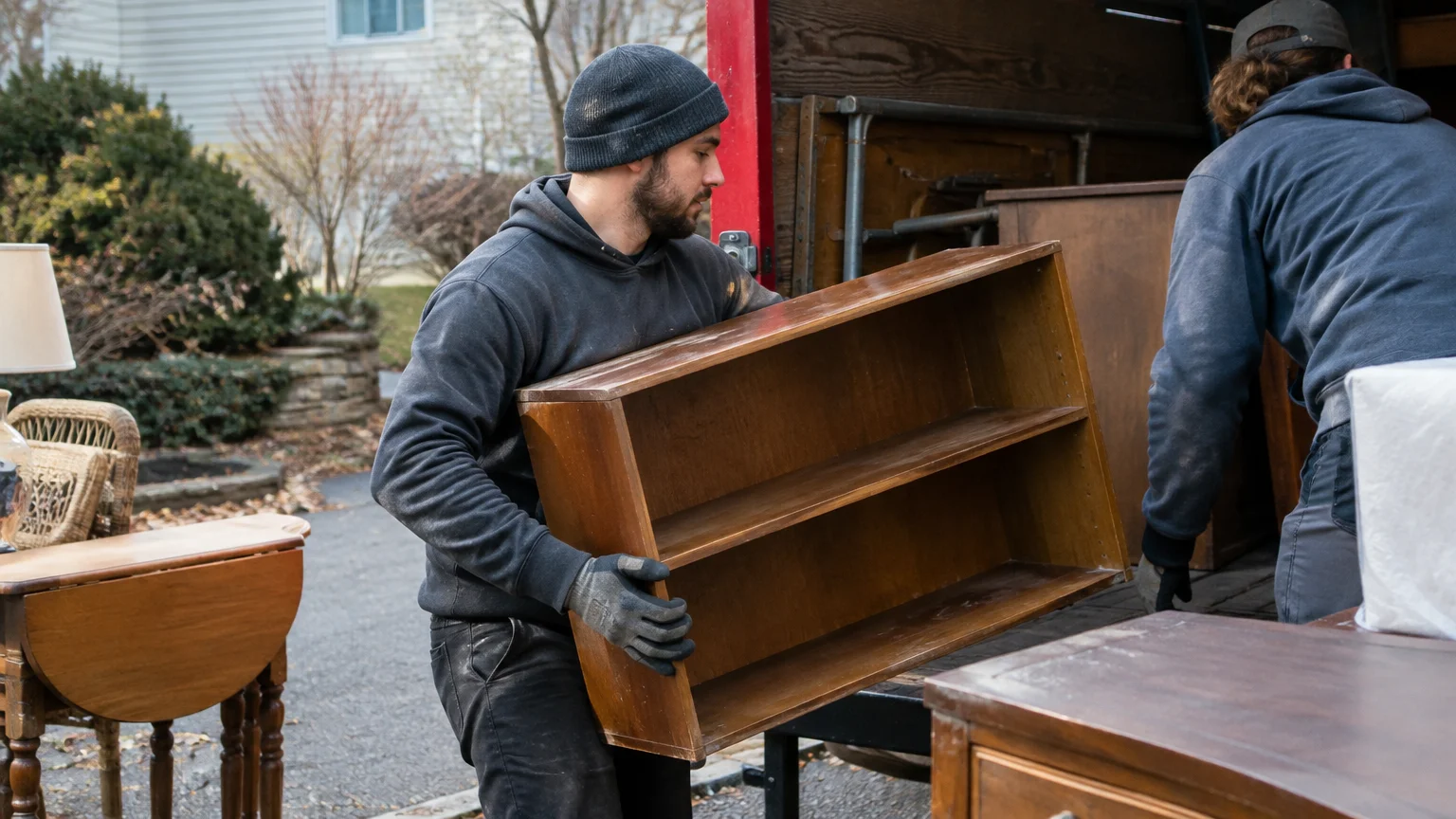
Safe furniture removal depends on the item, the route, and the people carrying it. Heavy or awkward pieces can hurt someone or damage a home if moved without a plan. Do not lift a piece alone if you cannot control its weight or see the route clearly. Asking for help is the safer choice when a load feels too heavy.
Why lifting, stairs, and narrow hallways require planning
A large sofa may fit through a doorway only when it is turned the right way. Stairs and narrow halls can make that turn harder. Sharp corners and floors that can scratch also need care. Measuring the item and noting tight spots can help the crew plan how to move it.
Check whether doors need to be held open. Move loose rugs and small objects away from the path. Do not stand below a heavy item as someone carries it on stairs. Keep children and pets away until the furniture is out of the home.
When disassembly or additional help may be needed
Some bed frames, tables, and sectionals can be taken apart to make them easier to move. You can remove simple parts if the steps are clear and the task feels safe. Stop if a piece is stuck or unsteady, or if you are not comfortable using the tools it needs.
Large or damaged furniture may need more than one person to carry it safely. The crew can decide how many people and what plan the job needs. Tell the service about unusual weight, broken parts, or hard access before pickup. Do not wait until the crew is already moving the item to share these details.
What happens to furniture after it is hauled away?
After pickup, furniture may be considered for reuse, donation, recycling, or disposal. The right choice depends on its condition, local rules, and whether a suitable place can accept it. Ask the service how it handles usable pieces and what may happen to damaged furniture. Not every item can follow the same path.
Donation and reuse when items are suitable
Furniture that is clean and safe to use may suit donation or reuse. A charity or reuse group may have its own rules about stains, wear, safety, and item types. A service cannot promise that every piece will be accepted. Ask how it decides whether furniture is suitable.
If a piece may be donated, keep it clean and dry before pickup. Leave its matching parts with it, such as shelves or table leaves. Tell the service about any damage. This helps others understand the item’s condition and whether it can be used safely.
Recycling and responsible disposal options
Some furniture parts can be recycled, while others may need to be thrown away. A piece may contain wood, metal, fabric, and foam. Items made from several materials can be harder to recycle than a simple metal frame.
Local rules and available sites differ across Pennsylvania. Ask the service about its usual process, and check local guidance for items that need special disposal. Do not treat a refrigerator or another appliance like ordinary furniture. Ask about the right way to handle each appliance before pickup.
How can homeowners plan a furniture removal job?
A little planning helps you explain the job and choose a pickup that meets your needs. Note which pieces need to go, where they are, and whether the route has any limits. Clear details can help the service decide what the job needs. They can also prevent confusion on pickup day.
Make a clear item list
Write down each item, how many there are, and whether any are broken or unusually heavy. For example, “one sectional sofa, one mattress, and two dressers” gives a clearer picture than “some furniture.” If the service lets you share photos, a picture may help explain a large or unusual piece.
Keep furniture separate from other things you want removed. If the job includes a fridge, electronics, concrete, or household rubbish, list those items too. Different materials may need different handling. Sharing the full list helps the service understand the work before pickup.
Think through timing and access
Choose a time when the route can stay clear and someone can point out the items. If the home has a shared entrance, a narrow driveway, or building rules, tell the service early. Renters and property managers may need permission before furniture can be removed from a unit. Check those rules before setting up the pickup.
Not every job needs special preparation. Many homeowners can sort items, clear small obstacles, and confirm what is leaving on their own. Professional furniture removal can help when pieces are heavy, stairs are hard to manage, or materials should not be moved casually. Ask the service what you should prepare before the crew arrives.
How do you choose a junk removal service in Pennsylvania?
A good service should explain what it accepts, how pickup works, and how items may be handled after collection. Ask clear questions and check that the answers fit your job. West Chester PA Junk Removal serves West Chester and can explain the steps for a household pickup. Local service options can differ, so make sure the details match your needs.
Questions to ask about item handling and disposal
Ask whether the service takes every item on your list, including appliances and damaged furniture. Find out whether usable pieces may be considered for reuse or donation. Ask if special items need a separate plan. It is also helpful to share details about stairs, narrow doorways, and long carrying routes.
Useful questions include:
- Does the service accept each item on the list?
- Should appliances or damaged pieces be described separately?
- How should the homeowner prepare the route and furniture?
- What may happen to furniture that cannot be reused?
Clear answers help you know what to expect. If the service is unsure about an item, confirm before pickup rather than assuming it will be taken. This is important for refrigerators, electronics, and items that may have special disposal rules. A clear plan can help avoid problems on the day of collection.
What to expect when arranging a furniture pickup
When you arrange a pickup, share the item list, where each piece is in the home, and any access problems. Ask what the crew needs from you and whether someone should be there to point out the items. A clear plan helps prevent the crew from taking something that should stay.
Disposal options can differ from one Pennsylvania community to another. A service that knows the area may explain its own process, but you can still ask where special items should go. Check whether your home is within the West Chester service area before you plan the pickup.
Frequently Asked Questions
How can someone get rid of old furniture?
A homeowner can donate usable furniture, offer it for reuse, or arrange removal. First, check the item’s condition and the rules of any group that may take it. For large or heavy pieces, a junk removal service may handle the lifting and hauling. Share the item’s size, condition, and location when arranging a pickup.
How can someone get rid of broken furniture?
A service may accept broken furniture for hauling, but ask first. Point out sharp edges, loose parts, or broken glass before pickup. Do not try to carry an unsteady item alone. If you can safely take off loose parts, keep them together so nothing is left behind.
How should a refrigerator be disposed of?
Ask a junk removal service or your local waste office how to dispose of a refrigerator in your area. A fridge may need special handling, so do not treat it like ordinary furniture. Empty it before pickup. Do not remove wires or sealed parts yourself.
Can homeowners move furniture themselves?
Homeowners can move light items when the path is clear and they can control the load. You do not need a professional just to sort furniture or clear small obstacles. Heavy pieces, stairs, tight turns, or unsteady furniture call for extra help. Plan the route first and do not lift beyond what feels safe.
What should someone ask before booking furniture removal?
Ask whether the service accepts each item, how to prepare the furniture, and what route details the crew needs. Ask how usable pieces may be handled and whether appliances need a separate plan. Clear answers help you understand the pickup before the crew arrives. Share any changes to the item list as soon as you can.
Key takeaways
- Residential junk removal can include furniture pickup and household cleanouts.
- Services may accept different items and use different disposal options.
- Clear the route and set aside items that should stay.
- Do not lift heavy or unsteady furniture alone.
- Ask how appliances and usable furniture may be handled.
Conclusion
Furniture removal can help clear a home when large pieces are hard to carry or move through tight spaces. Make a list, clear a safe route, and ask about special handling before pickup. West Chester PA Junk Removal can help homeowners plan residential furniture removal. Contact us to discuss the items you need removed.